|
Stories from the dialysis comunity across the globe.
|
|
Vascular Calcification Predicts Early Death in CKD Patients - Renal and Urology News |
 |
 |
|
March 23, 2015
Calcification in the media of arteries may be a useful measure for screening.
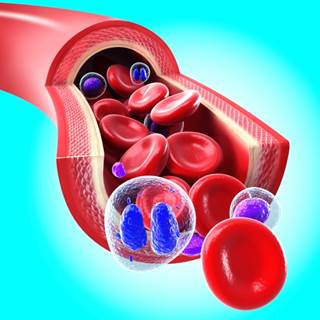
Medial calcification may be a useful index to identify CKD patients at higher risk of death and hospitalizations, according to experts.
Vascular calcification (VC) is highly prevalent in non-dialysis patients with chronic kidney disease (CKD)—and a certain type, medial calcification, might be deadly.
A new study finds that 79% of patients have VC and in 47% it is prominent. In particular, VC occurring in the medial portion of muscular arteries was associated with twice the risk of all-cause mortality and 3.5 times the risk of cardiovascular mortality. VC did not predict CKD progression.
“Our data suggest that the presence of VC assessed by radiographs of the hand and pelvis is an independent and robust predictor of all-cause and cardiovascular mortality and the period of hospitalization in patients with non-dialysis CKD, supporting the KDIGO [Kidney Disease Improving Global Outcomes] guidelines on the use of simple radiology for screening VC in patients with CKD,” researchers led by José L. Górriz, MD, of Hospital Universitario Dr. Peret in Valencia, Spain, wrote in a paper published online ahead of print in the Clinical Journal of the American Society of Nephrology.
The association between VC and the risk of morbidity and mortality is a common finding in patients on dialysis, the researchers noted. Their data showed that this association begins at earlier stages of CKD, they stated.
For this analysis of the Study of Mineral and Bone Disorders in CKD, the researchers studied VC in 742 patients with non-dialysis CKD stages 3–5 from 39 Spanish centers followed from 2009–2012. The investigators evaluated two measures of VC: the Adragao score (based on x-rays of the hands and pelvis) and Kauppila score (based on x-rays of the lumbar spine).
Only an Adragao score 3 or greater was independently associated with all-cause and cardiovascular mortality as well as shorter hospitalization-free periods. The Adragao score reflects VC in muscular arteries, which are more susceptible to calcification of the media. (Kauppila score by comparison identifies calcification of the intima in elastic arteries, which appears to be partly age-related.)
In an editorial accompanying the new study, Wei Chen, MD, and Michel L. Melamed, MD, of Albert Einstein College of Medicine in Bronx, N.Y., noted that the study “importantly shows that VC starts earlier in the course of CKD, which suggests that it may be potentially modifiable long before the initiation of dialysis.”
Cardiovascular mortality is unacceptably high in CKD patients, and VC likely plays a large role either as the cause or as the marker of this mortality, they stated.
“The results suggest that medial calcification may have a greater prognostic power and may be a useful index to identify patients with CKD who are at higher risk of death and hospitalizations,” the editorialists stated.
Medial calcification is associated with arterial stiffness, systolic hypertension, and left ventricular hypertrophy. Future studies should assess the prognostic value of various available imaging tools, they noted.
“The findings also support the search for possible modifiable factors in the pathogenesis of VC including the role of serum phosphate, phosphate binders, vitamin D, and other CKD-mineral and bone disorder markers that were not fully evaluated in the study,” Drs. Chen and Melamed wrote.
Sources
- Gorriz, JL, et al. Clinical Journal of the American Society of Nephrology, 2015; doi: 10.2215/CJN.07450714.
- Wei Chen and Michal L. Melamed. Vascular Calcification in Predialysis CKD: Common and Deadly; published ahead of print by Clinical Journal of the American Society of Nephrology, March 13, 2015; doi:10.2215/CJN.01940215.
|
|
|
Research and Markets: Global Dialysis Market Report: 2015 Edition - Business Wire (press release) |
|
|
|
DUBLIN--(BUSINESS WIRE)--Research and Markets (http://www.researchandmarkets.com/research/h5hshp/global_dialysis) has announced the addition of the "Global Dialysis Market Report: 2015 Edition" report to their offering.
Dialysis is the artificial process of eliminating waste and unwanted water from the blood. It is carried out by using a special fluid called dialysate, a mixture of pure water and chemicals, is carefully controlled to pull wastes out of your blood without removing substances your body needs. There are two types of dialysis: hemodialysis and peritoneal dialysis. Hemodialysis removes wastes and water by circulating blood outside the body through an external filter, called a dialyzer and in peritoneal dialysis, wastes and water are removed from the blood inside the body using the peritoneum as a natural semipermeable membrane.
End stage renal disease (ESRD) is the last stage of chronic kidney disease. This is the situation when kidney is functioning below 10% of their normal function and they can no longer support a person's day to day life. The common causes of ESRD include high blood pressure, atherosclerosis, and genetic disorders. ESRD treatment is carried out either by dialysis or kidney transplant.
The report analyzes the global and regional dialysis markets. Some of the factors driving the growth of dialysis market include: growing number of diabetic patients, increasing dialysis population and incidences of chronic and infectious diseases which has further increased the healthcare expenditure and pharmaceutical sales. Market dynamics like key trends and development, challenges and growth drivers are discussed in detail. The key players having the vicious competition with each other are: DaVita, Baxter, and Fresenius. These players are being profiled in the report along with their key financials and strategies for growth.
Key Topics Covered:
1. Overview
2. Market Size
3. Market Dynamics
4. Competitive Landscape
5. Company Profiles
6. Market Outlook
Companies Featured:
- DaVita Inc.
- Baxter International Inc.
- Fresenius Medical Care
For more information visit http://www.researchandmarkets.com/research/h5hshp/global_dialysis
|
|
New Urine Biomarkers Identified for Renal Cell Carcinoma - Monthly Prescribing Reference |
|
|
March 23, 2015

New Urine Biomarkers Identified for Renal Cell Carcinoma
(HealthDay News) — Urine aquaporin-1 (AQP1) and perilipin-2 (PLIN2) seem to have utility as biomarkers for diagnosing malignant clear cell or papillary renal cell carcinoma (RCC) in a screening paradigm, according to a study published online March 19 in JAMA Oncology.
Jeremiah J. Morrissey, Ph.D., from Washington University in St. Louis, and colleagues examined the clinical utility, sensitivity, and specificity of AQP1 and PLIN2 concentrations as biomarkers for RCC. Urine samples were obtained from 720 patients undergoing routine abdominal computed tomography (CT) screening (screening population), 80 healthy controls, and 19 patients with pathologically-confirmed RCC.
The researchers found that all patients with known RCC had significantly higher urine AQP1 and PLIN2 concentrations (P < 0.001) compared with the healthy controls and the screening population. For urine AQP1 and PLIN2 concentrations individually or in combination, the area under the receiver operating characteristic curve was 0.990 or greater, with sensitivity of 95 percent or higher and specificity of 91 percent or greater compared with controls or the screening population. Three of the 720 screened patients had biomarker concentrations indicative of RCC and they were found to have an imaged renal mass on CT. On further evaluation, two patients had pathologically confirmed RCC.
"These tumor-specific proteins have high clinical validity and substantial potential as specific diagnostic and screening biomarkers for clear cell or papillary RCC and in the differential diagnosis of imaged renal masses," the authors write.
Two authors have a European patent on the use of urine AQP1 to diagnose renal cancer.
Abstract
Full Text
Editorial
|
|
|
New Urine Biomarkers Identified for Renal Cell Carcinoma - Doctors Lounge |
|
|
|
Urine aquaporin-1 and perilipin-2 seem to have utility as biomarkers for diagnosing malignant clear cell or papillary renal cell carcinoma in a screening paradigm, according to a study published online March 19 in JAMA Oncology.
MONDAY, March 23, 2015 (HealthDay News) -- Urine aquaporin-1 (AQP1) and perilipin-2 (PLIN2) seem to have utility as biomarkers for diagnosing malignant clear cell or papillary renal cell carcinoma (RCC) in a screening paradigm, according to a study published online March 19 in JAMA Oncology.
Jeremiah J. Morrissey, Ph.D., from Washington University in St. Louis, and colleagues examined the clinical utility, sensitivity, and specificity of AQP1 and PLIN2 concentrations as biomarkers for RCC. Urine samples were obtained from 720 patients undergoing routine abdominal computed tomography (CT) screening (screening population), 80 healthy controls, and 19 patients with pathologically-confirmed RCC.
The researchers found that all patients with known RCC had significantly higher urine AQP1 and PLIN2 concentrations (P < 0.001) compared with the healthy controls and the screening population. For urine AQP1 and PLIN2 concentrations individually or in combination, the area under the receiver operating characteristic curve was 0.990 or greater, with sensitivity of 95 percent or higher and specificity of 91 percent or greater compared with controls or the screening population. Three of the 720 screened patients had biomarker concentrations indicative of RCC and they were found to have an imaged renal mass on CT. On further evaluation, two patients had pathologically confirmed RCC.
"These tumor-specific proteins have high clinical validity and substantial potential as specific diagnostic and screening biomarkers for clear cell or papillary RCC and in the differential diagnosis of imaged renal masses," the authors write.
Two authors have a European patent on the use of urine AQP1 to diagnose renal cancer.
Abstract
Full Text
Editorial
 Copyright © 2015 HealthDay. All rights reserved. Copyright © 2015 HealthDay. All rights reserved.
Submit your opinion:
|
|
Study shows good outcomes for HIV positive kidney transplant recipients - NephrologyNews.com |
|
|
|
HIV positive kidney transplant recipients who are not infected with hepatitis C virus (HCV) have similar kidney and patient survival rates as HIV negative recipients, according to a study conducted by researchers at the University of Alabama at Birmingham. The article, entitled “A National Study of Outcomes among HIV-infected Kidney Transplant Recipients," is published online ahead of print in Journal of the American Society of Nephrology (JASN). The findings suggest that excellent outcomes can be achieved among HIV positive kidney transplant recipients.
Chronic diseases represent the leading cause of death among HIV positive individuals. Kidney transplantation is now offered as an acceptable treatment option for HIV positive patients with end-stage renal disease, although experience with HIV positive kidney transplantation is in its relative infancy.
Read also
Study shows injured kidneys can be used for transplants
Study suggests little increase in number of potential organ donors over next five years
“Understanding long-term outcomes among HIV positive kidney transplant recipients is paramount to ensure continued access to life saving kidney transplantation for this vulnerable population,” said study author Jayme Locke, MD, MPH, FACS, from the University of Alabama at Birmingham).
To get a better understanding of the long-term health of HIV positive patients who undergo kidney transplantation, Dr. Locke and her colleagues examined the health of the US HIV positive kidney transplant population from 2002 to 2011. During that time, 510 HIV positive adults underwent kidney transplantation. These patients were matched 1:10 with HIV negative adults who underwent kidney transplantation.
Among the major findings:
- Overall, 5- and 10-year kidney survival rates were significantly lower among HIV positive recipients compared with HIV negative recipients (69% vs. 75% and 50% vs. 54%, respectively); however, when limited to patients without HCV, mono-infected HIV positive recipients had similar 5-year and 10-year kidney survival rates compared with uninfected recipients.
- Overall, patient survival among HIV positive recipients was significantly lower than survival rates of HIV negative recipients; however, when limited to patients without HCV, rates were similar for mono-infected HIV positive recipients and uninfected recipients at both time points.
- HIV positive recipients co-infected with HCV had inferior kidney and patient survival rates.
The findings reveal that HIV positive kidney transplant recipients who are not infected with HCV have similar kidney and patient survival rates as HIV negative recipients. Importantly, though, almost 25% of HIV positive kidney transplant recipients are co-infected with HCV, compared with only 5% of the general kidney transplant recipient population. This study’s results suggest caution in transplanting co-infected patients.
“Locke and colleagues should be commended for providing a national perspective on the status of HIV transplantation which supports the expanded use of kidney transplantation in this group,” wrote Alissa Wright, MD and John Gill, MD, MS, from the University of British Columbia, in Canada, in an accompanying editorial.
Study co-authors include Shikha Mehta, MD, Rhiannon Reed, MPH, Paul MacLennan, PhD, Allan Massie, PhD, Anoma Nellore, MD, Christine Durand, MD, and Dorry Segev MD, PhD.
|
|
|
|
|
<< Start < Prev 341 342 343 344 345 346 347 348 349 350 Next > End >>
|
|
Page 342 of 4210 |

 Log in to explore the world's most comprehensive database of dialysis centres for free!
  Professional dialysis recruitment


